




Image credit: Photo by @valhallaorcaexpedition
They hunt in teams, speak their own dialects – and are threatened by plastic
Imagine diving into the deepest blue of the ocean. Suddenly, a black and white shadow glides past you – elegant, powerful, almost six meters long. An orca. Or rather: an entire family. Because orcas are not solitary creatures. They live in close family units that stay together for life. And that's exactly what makes them so special – and so vulnerable.
5 facts about orcas that will surprise you 🐬
1. Orcas are not whales – yet they are the largest dolphins in the world
Although they are called "killer whales," orcas belong to the dolphin family. With a length of up to 9 meters and a weight of 6 tons, they are the largest members of this family. The name "killer whale" comes from Spanish seafarers who called them "asesina de ballenas" – whale killers. Because yes, orcas actually hunt even blue whales.
2. Every orca family has its own language
This is no joke: Different orca groups (so-called "pods") have demonstrably different dialects. They communicate with clicks, whistles, and calls – and young orcas learn the "family dialect" from their mothers. Researchers have even shown that pods that meet more frequently develop more similar dialects. Just like in neighboring human villages.
3. Orca grandmothers are indispensable
Orcas are one of the few animal species in which females experience menopause. Why? Because grandmothers are crucial for the survival of the group. They know the best hunting grounds, warn of dangers, and take care of their grandchildren. Studies show that pods that lose their grandmothers have significantly lower survival rates.
4. Orcas pass on knowledge – true culture
Different orca populations have developed completely different hunting strategies. Some create waves to wash seals off ice floes. Others deliberately strand themselves on beaches to catch sea lions. This knowledge is passed down from generation to generation – true culture, which we otherwise know almost exclusively from humans and some great apes.
5. Plastic poisons orcas from within
And here's where it gets serious: As apex predators, orcas are at the top of the food chain. This means that pollutants from plastic – especially PCBs and other persistent toxins – accumulate in their bodies. A study in the journal Science warns: Around half of all orca populations worldwide are threatened with extinction due to pollutant contamination. Not by hunting. By our waste.

Image credit: Photo by @valhallaorcaexpedition
What does this have to do with us? More than you think.
Every piece of plastic that ends up in the ocean eventually becomes microplastic. Microplastic is eaten by small fish. Small fish are eaten by larger fish. And they end up in the stomach of an orca. This is how toxins accumulate a thousandfold – a process that scientists call "bioaccumulation."
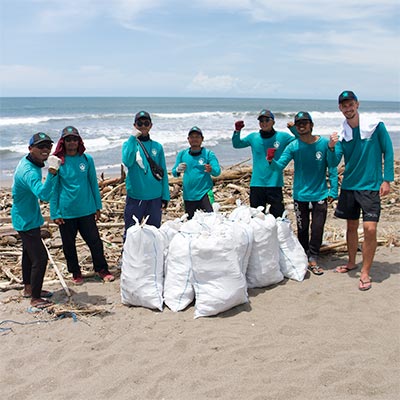
When Dominik first visited Bali, he actually just wanted to learn to surf. Instead, he was shocked: plastic on the beaches, as far as the eye could see. In Medewi, he then met a local who was collecting plastic on the beach all by himself. This moment changed everything – and Oceanmata was born.
"I can't deal with so many things that need my help. When you buy something from you, it's so easy. It costs a bit more, but I have a completely different feeling when it arrives." – Oceanmata customer
What Oceanmata is doing against the plastic flood 🌊
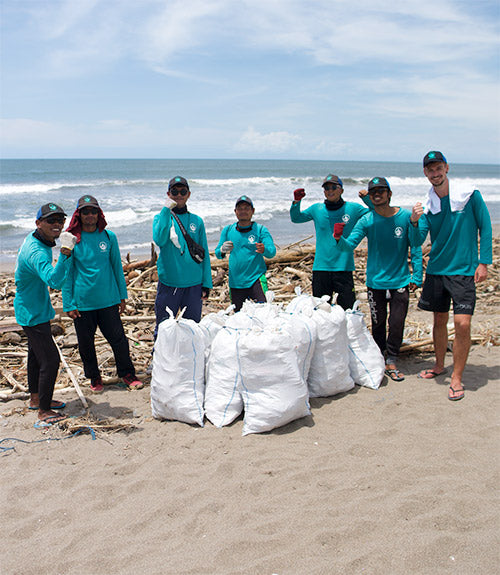
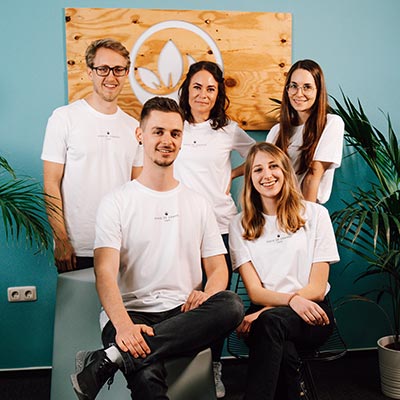
Today, our 11-person team in Medewi, Bali, works every day to remove plastic from the ocean and beaches. We have already collected over 300,000 kg of Ocean Plastic. But cleaning up alone is not enough – which is why we also focus on prevention:
- River barriers intercept plastic before it enters the sea
- School lessons in local schools – so the next generation does better
- Free trash cans for locals in Medewi
- On-site recycling with Precious Plastic machines – waste is turned into new raw materials
Our philosophy? To see plastic not as waste, but as a valuable raw material. And: A phone case alone won't save the world. But over 165,000 ocean heroes who take small steps together – they can.
Want to help? It's that simple 💙
Every Oceanmata product = 1 kg less plastic in the ocean
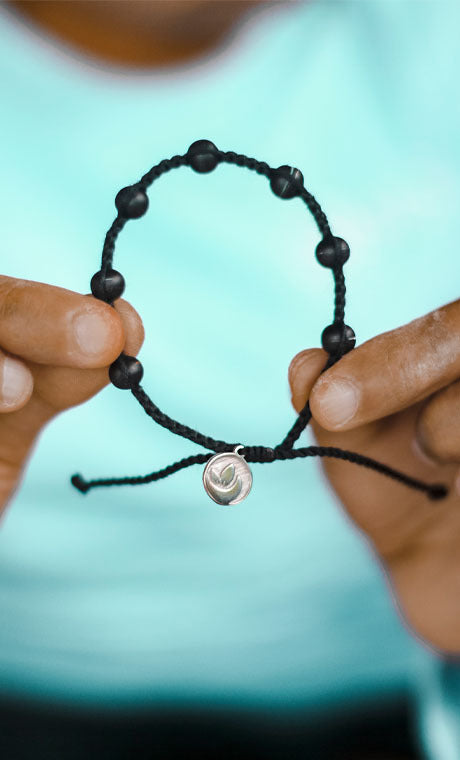
Whether it's a sustainable iPhone case, an Ocean Plastic bracelet, or a marine animal sponsorship as a gift – with every purchase, you become part of the solution.
Want to learn more about fascinating marine creatures? Then read our articles about dolphins and whales – because the ocean needs every voice.