

They call each other by name, use tools, and mourn deceased kin. Dolphins are among the most fascinating creatures on our planet – and yet they swim through a sea full of plastic. Here's why that's a problem and what you can do about it.
https://shopify-staged-uploads.storage.googleapis.com/tmp/245956671/files/ba4f62ea-b035-4e9a-8445-49de4b5298b6/image_0.jpgDolphins are smarter than you think

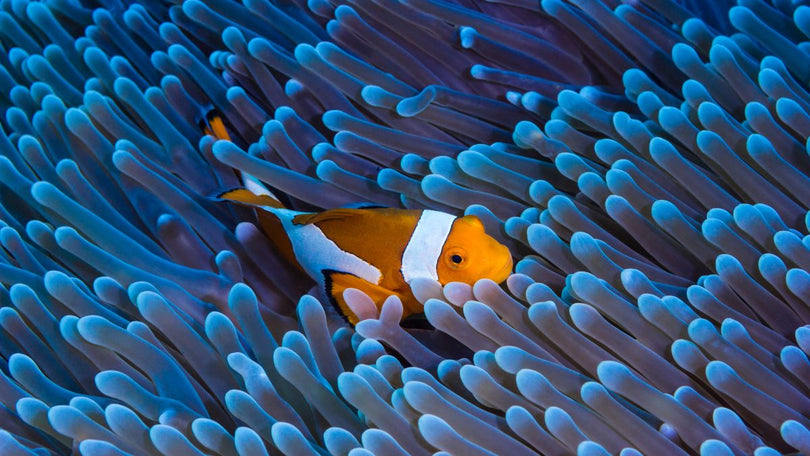
Image credit: Photo by @smkeenaphotography
Image credit: Photo by @mai.roper
Hand on heart: When you think of dolphins, you probably have an image of a smiling bottlenose dolphin elegantly leaping through the waves. But did you know that these animals are among the most intelligent creatures on Earth – second only to humans?
Dolphins have brains that are in some areas more complex than ours. They recognize themselves in mirrors, something only great apes, elephants, and magpies can do. They communicate with individual whistles – so to speak, with their own name, which each dolphin carries from birth. Some populations even use tools: Off the coast of Australia, bottlenose dolphins put sponges on their snouts to protect their sensitive skin when foraging on the seabed.
What does this have to do with marine conservation? It's simple: When we pollute the ocean with plastic, we are not just threatening an ecosystem, but beings that know culture, grief, and friendship.
The invisible threat: Plastic in the world of dolphins
According to UNEP, around 11 million tons of plastic enter our oceans every year. For dolphins, this means their entire habitat is affected. And in several ways.
Risk of confusion: Plastic bags look strikingly similar to jellyfish underwater. Dolphins swallow them and can suffocate or starve because the plastic blocks their stomach. Studies show that plastic parts are found in the digestive tracts of up to 30% of stranded dolphins in the Mediterranean.
Microplastics in the food chain: Fish ingest tiny plastic particles. Dolphins eat these fish – and thus accumulate pollutants like plasticizers and flame retardants in their bodies over years. Research teams have detected alarming concentrations of these substances in dolphin tissue.
Entanglement in ghost nets: Abandoned fishing nets floating in the sea are a deadly trap for dolphins. They get entangled, cannot surface, and drown. It is estimated that hundreds of thousands of marine mammals worldwide die each year as bycatch or in ghost nets.
What Dominik sees every day in Medewi

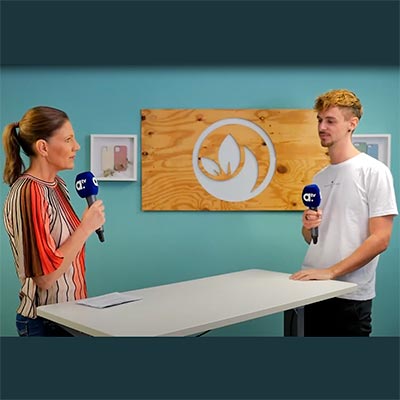
When Dominik Karl gave up his secure job as an engineer at Airbus in 2020 and founded Oceanmata, he knew: The plastic problem cannot be solved from a desk. So he built a team in Medewi, Bali – where he first stood on the beach in shock and saw the extent of the pollution with his own eyes.
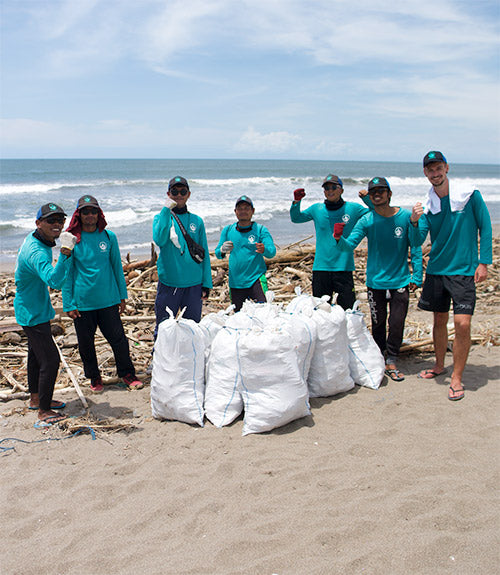
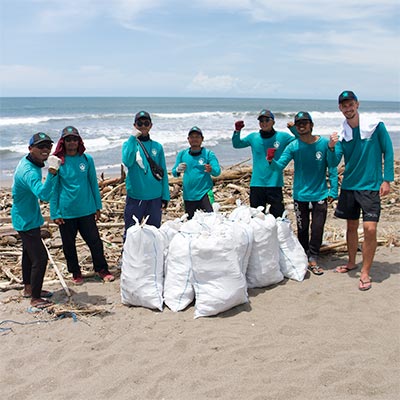
Today, 11 employees are on site in daily operation. They collect plastic on the beaches, operate river barriers that intercept plastic before it reaches the sea, and provide educational lessons in local schools. The collected plastic is sorted and recycled on site with Precious Plastic machines. The team has already collected over 300,000 kg of ocean plastic – and new kilos are added every day.
The waters around Bali are home to numerous dolphin species. Anyone who goes out with the fishermen from Lovina Beach in the morning can watch spinner dolphins hunting. But plastic also floats everywhere in the water here. This is precisely why Oceanmata focuses not only on cleaning up, but on prevention – because plastic that doesn't even enter the sea doesn't threaten dolphins either.
https://shopify-staged-uploads.storage.googleapis.com/tmp/245956671/files/819ee4a3-f64b-4e09-82ca-9bf4406da7d9/image_1.jpg5 amazing facts about dolphins you definitely didn't know
1. Dolphins sleep with one eye open. They always let only one half of their brain sleep and keep an eye on their surroundings with the other – literally.
2. They help other species. There are documented cases where dolphins have protected swimmers from sharks by forming a protective circle around the people.
3. They grieve. Dolphin mothers have been observed carrying dead calves for days. Researchers see this as a sign of true sorrow.
4. Each population has its own culture. Dolphins in different regions have different hunting techniques that they pass on from generation to generation – similar to human traditions.
5. They can name themselves. Each dolphin develops a unique signature whistle. Other dolphins use this whistle to specifically call a particular group member.
What you can do for dolphins – today
You don't have to go out to sea to help dolphins. Every decision that brings less plastic into the ocean is a step in the right direction. Here are concrete approaches:
Avoid single-use plastic: The most obvious, but most effective measure. Water bottle, cloth bag, your own coffee cup – small habits with a big impact.
Pay attention to packaging when shopping: Choose products with less plastic packaging. Unpackaged stores are ideal, but you can also make conscious choices in the supermarket.
Choose products that protect the ocean: With every sustainable phone case from Oceanmata, 1 kg of plastic is collected from the ocean. Does that sound like a small amount? Our community of over 165,000 ocean heroes proves: Together we move mountains – or rather: tons of plastic.
Give a marine animal sponsorship: With a symbolic sponsorship – for example, for a dolphin – you support the daily work of our team in Bali and receive regular updates on progress.
Educate: Share your knowledge! The more people understand what plastic does in the sea, the more things change. A single conversation can make a difference.
"I can't deal with so many things that need my help. When you buy something from you, it's so easy. It costs a bit more, but I have a completely different feeling when it arrives."
– Oceanmata customer
Plastic is not waste – it's a raw material
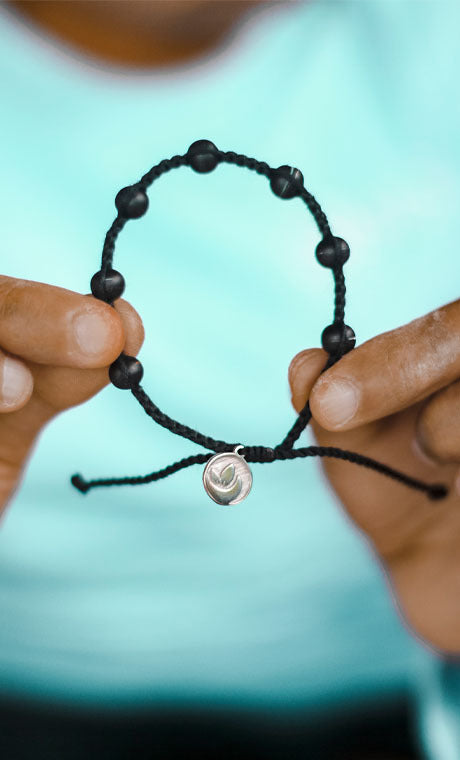
At Oceanmata, we believe in seeing plastic not as waste, but as a valuable raw material. That's why we recycle collected ocean plastic on site in Medewi and transform it into new products – including our bestselling phone cases and ocean plastic bracelets.
A phone case alone won't save the world. But thousands of people taking small steps together can. And that's exactly the Oceanmata philosophy.
Every dolphin that glides safely through clean water today is proof that the effort is worthwhile. For us. For the dolphins. For the ocean. 🐬💙
Join us – for a plastic-free ocean!
Become part of our community of over 165,000 ocean heroes. Every product = 1 kg less plastic in the sea.
Frequently asked questions about dolphins and marine conservation
Are all dolphin species threatened?
Not all, but many. The Maui dolphin in New Zealand, for example, is critically endangered with fewer than 60 individuals. River dolphins in the Amazon and Yangtze are also severely threatened. Even more common species like the bottlenose dolphin suffer from habitat loss, pollution, and bycatch.
What does plastic have to do with dolphins?
Plastic threatens dolphins directly (ingestion, entanglement) and indirectly (microplastics in the food chain, pollutant exposure). The less plastic ends up in the sea, the safer the dolphins' habitat.
How does Oceanmata specifically help?
Our 11-member team in Medewi, Bali, collects plastic daily on beaches, operates river barriers, provides school education, and recycles on site. We have already collected over 300,000 kg of ocean plastic. For every product sold, 1 kg is added.
Entdecke passende Oceanmata Produkte