

🐴 Short Facts: Seahorses
- Scientific Name: Hippocampus (approx. 46 species)
- Size: 1.5 cm to 35 cm – depending on the species
- Special Feature: Males get pregnant
- Habitat: Seagrass meadows, coral reefs, mangrove forests
- Threat: Habitat loss, bycatch, traditional medicine
- IUCN Status: Many species endangered or critically endangered
Why seahorses are among the most fascinating animals in the ocean
Hand on heart: Have you ever seen a seahorse in the wild? Most people only know these magical creatures from aquariums or documentaries. Yet, seahorses are true survivors – and at the same time one of the most threatened animals in our oceans. With their horse-like head, prehensile tail, and independently moving eyes, they appear to be creatures from another world. And indeed: what science has discovered about them in recent years is at least as fascinating as their appearance.

Dad gets pregnant – a unique phenomenon in the animal kingdom 🤰
Seahorses are the only animals on our planet where the male carries the babies. No joke. The female lays her eggs in a special brood pouch on the male's belly. There they are fertilized, supplied with nutrients, and after about two to four weeks, they are born as tiny, fully developed seahorses – sometimes up to 2,000 at once.
Researchers at the University of Sydney have discovered that the male's brood pouch shows amazing parallels to the mammalian uterus: It regulates oxygen, nutrients, and even immune defense for the offspring. Evolution at its finest.
Masters of camouflage – how seahorses survive
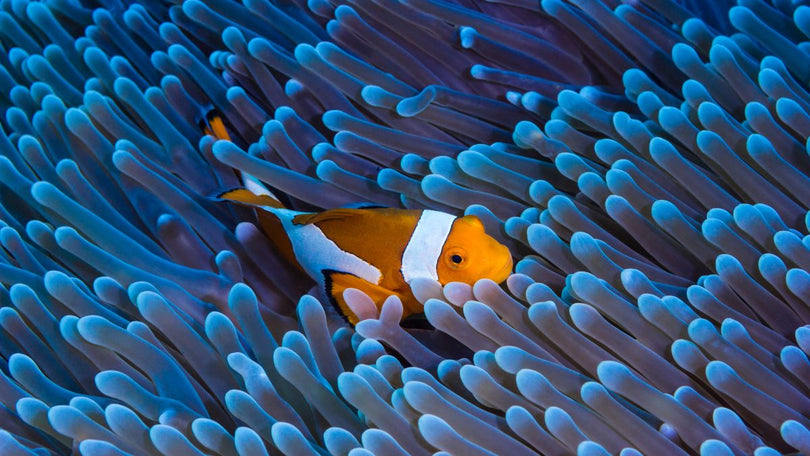
Seahorses are not fast swimmers. Quite the opposite: with their tiny dorsal fin, which beats up to 35 times per second, they are among the slowest fish in the sea. Their survival trick? Perfect camouflage. Many species can adapt their color to their surroundings – from bright yellow to delicate pink to a brown tone that makes them practically invisible among seagrass and coral.
The so-called pygmy seahorses (Hippocampus bargibanti) take this to the extreme: they are only 2 cm tall and are so perfectly adapted to their fan coral that they were only discovered by chance in 1969 – by a scientist who actually intended to study the coral.
Why seahorses are in danger 🚨
An estimated 150 million seahorses are removed from the oceans each year. The biggest threats:
- Traditional Medicine: Dried seahorses have been used in traditional Chinese medicine for centuries. Despite a lack of scientific evidence for their effectiveness, demand is enormous.
- Bycatch: Millions of seahorses end up as unwanted bycatch in shrimp trawls every year – often in Southeast Asia, where our team in Bali also witnesses the consequences of overfishing daily.
- Habitat Loss: Seagrass meadows and coral reefs are disappearing worldwide at an alarming rate. And with them, the seahorses' home.
- Plastic Pollution: Microplastics accumulate in the seagrass meadows where seahorses live. Researchers have even detected plastic particles in the stomachs of seahorses.

What you can do for seahorses 🌊
The good news: You don't have to be a marine biologist to help seahorses. Even small decisions in your daily life make a difference:
- Conscious Fish Consumption: Look for sustainable fishing labels like MSC. Shrimp from trawling? Better not.
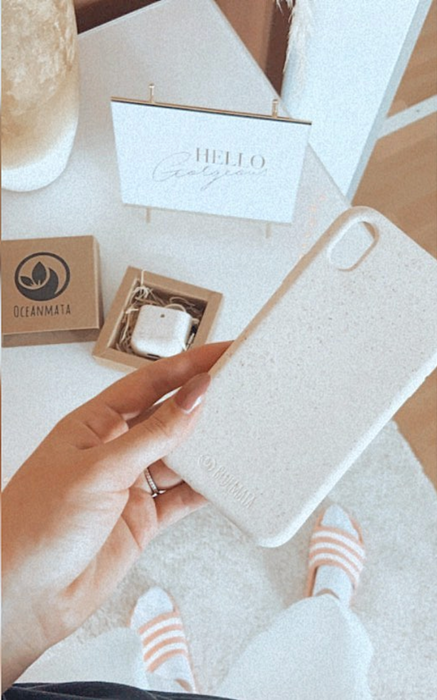
- Reduce Plastic: Every piece of plastic less is a piece more habitat for seahorses and other marine life. With sustainable phone cases made from ocean plastic, you turn the problem into part of the solution.
- Education: Share your knowledge! The more people learn about the threat to seahorses, the greater the pressure on politics and industry.
- Support Sponsorships: With a marine animal sponsorship at Oceanmata, you directly contribute to the protection of the underwater world.
Fun Facts: What you didn't know about seahorses
Finally, a few facts that are guaranteed to surprise you:
- Seahorses have no stomach. Their food passes directly through the digestive tract – which is why they have to eat almost constantly.
- Some species are monogamous and greet their partner every morning with a joint dance. They change color and swim side by side.
- The smallest seahorse in the world (Hippocampus denise) is only 1.5 cm tall – smaller than your fingernail.
- Seahorses have no scales, but a kind of bony armor made of small plates under the skin.
- They can move their eyes independently – like a chameleon. This way, they keep an eye on prey and predators simultaneously.
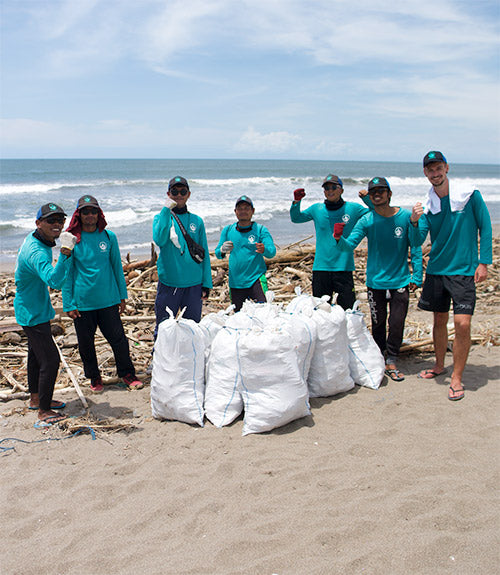
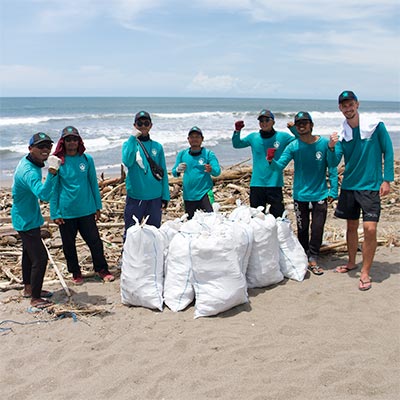
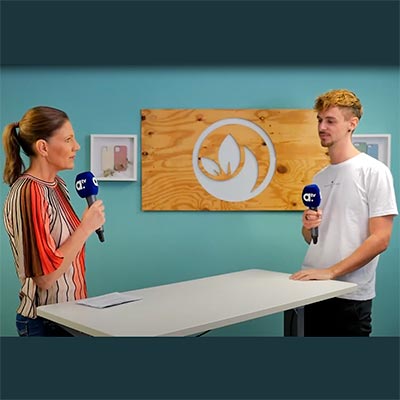
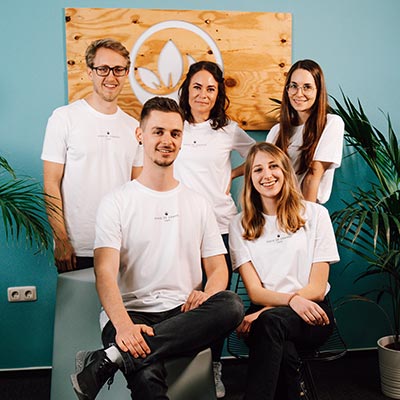
When Dominik quit his job as an engineer at Airbus in 2020 to found Oceanmata, he knew: the fight against ocean plastic begins with small steps. What started as an idea on a littered beach in Bali is now a team of 11 employees in Medewi who collect plastic every day.
Join us – for an ocean full of life
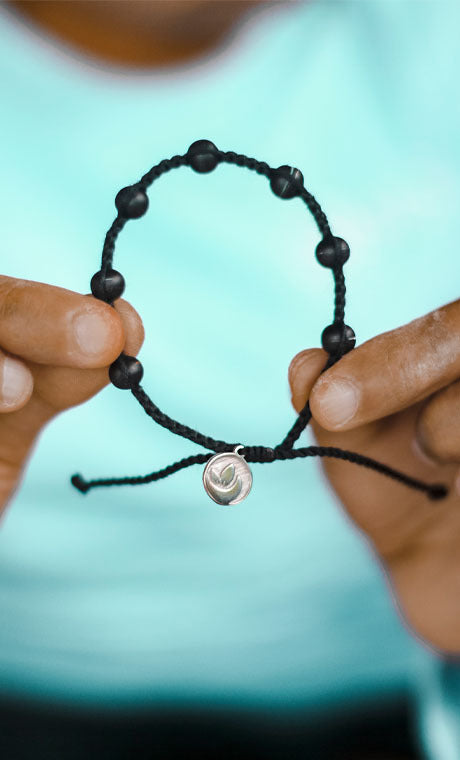
Seahorses are just one of countless species suffering from plastic pollution in our oceans. At Oceanmata, for every product sold, we collect 1 kg of plastic from the ocean – directly on the beaches of Medewi, Bali. Whether sustainable phone cases, ocean plastic bracelets, or marine animal sponsorships: every product makes a difference. For seahorses. For the ocean. For all of us.
Entdecke passende Oceanmata Produkte