




Plastic in the Deep Sea – How Our Waste Reaches the Earth's Deepest Point
When you think of plastic pollution in the ocean, you probably picture plastic bags on beaches or swirling patches of garbage on the water's surface. But the reality is far more terrifying: plastic has long since reached depths where no sunlight penetrates – the deep sea. Researchers have found plastic pieces in the Mariana Trench, almost 11,000 meters below the surface. That's deeper than Mount Everest is tall.

What do we know about plastic in the deep sea? 🔬
For a long time, the deep sea was considered a pristine, almost inaccessible habitat. However, studies in recent years paint a different picture. A groundbreaking investigation in the journal Marine Pollution Bulletin documented plastic finds at depths of over 10,000 meters. Single-use bags, packaging, and microplastic particles – everything was present.
Particularly alarming: A study by the UNEP (United Nations Environment Programme) estimates that up to 70% of marine litter sinks to the seafloor. This means that what we see on the surface is just the tip of the iceberg – literally.
How does plastic get so deep? 🌊
The journey from your plastic bottle to the deep sea is alarmingly simple. Plastic that enters the sea via rivers, coasts, or ships is distributed by currents. As algae and microorganisms settle on its surface – a process called "biofouling" – the plastic becomes heavier and slowly sinks. Some pieces take weeks, others months, to reach the seafloor.
Even more insidious: UV radiation and wave action break down larger plastic pieces into microplastics (smaller than 5 mm). These tiny particles are carried by ocean currents and transported to the deepest trenches. Once there, they virtually never degrade – the deep sea is cold, dark, and oxygen-poor. Perfect conditions for plastic to persist for centuries.
What deep-sea plastic does to life down there 🐙
The deep sea is not an empty, dead space – on the contrary. Fascinating creatures live here that exist nowhere else on Earth: bioluminescent jellyfish, giant isopods, deep-sea anglerfish, and hundreds of species we haven't even discovered yet. And it is precisely these creatures that are now confronted with our waste.
Deep-sea inhabitants mistake plastic fragments for food. During sampling, scientists found microplastics in the digestive tracts of amphipods from the Mariana Trench – animals living in one of the most remote corners of our planet. The particles can release toxins such as PCBs and plasticizers, which accumulate in the food chain.

The Mariana Trench – a landfill instead of a wonder of nature 🌏
The Mariana Trench in the western Pacific, at almost 11,034 meters, is the deepest point in the world's oceans. When director James Cameron descended there in a submarine in 2012, he found – in addition to breathtaking nature – a plastic bag. Since then, several expeditions have confirmed: Even here, at the absolute deepest point of our planet, human waste has left its mark.
Researchers from the Japan Agency for Marine-Earth Science and Technology (JAMSTEC) have cataloged over 3,000 photos of deep-sea litter. Single-use bags accounted for the largest proportion – some had been there for over 20 years. In an environment where organic material decomposes extremely slowly, plastic becomes a quasi-permanent component of the ecosystem.
Why deep-sea pollution affects all of us 🔄
You might think: "The deep sea is far away – what does that have to do with my everyday life?" More than you think. Deep-sea ecosystems play a central role in our planet's climate. The seafloor stores huge amounts of CO₂, and the organisms there are part of a global nutrient cycle that ultimately affects our fish stocks and even the air we breathe.
If plastic and its toxins disrupt these systems, it has consequences far beyond the deep sea. Studies show that pollutants from marine plastic eventually end up on our plates via the food chain – in fish, seafood, and even drinking water.
What can you do about deep-sea plastic? 💪
The good news: Every plastic bottle, every bag, every piece of packaging that doesn't even enter the sea cannot sink to the deep sea. And that's where you come in.
- Avoid single-use plastic: Reusable water bottles, cloth bags, reusable containers – small changes, big impact.
- Consume consciously: Look for plastic-free packaging and support brands that take responsibility.
- Support beach cleanups: Whether locally or through donations – every kilo of plastic collected protects the deep sea.
- Educate: Share your knowledge! The more people understand where their waste really goes, the greater the pressure on politics and industry.
- Choose Ocean Plastic products: Products made from recycled ocean plastic ensure that waste is removed from the sea and transformed into something meaningful.
What Oceanmata does against plastic pollution 🌊
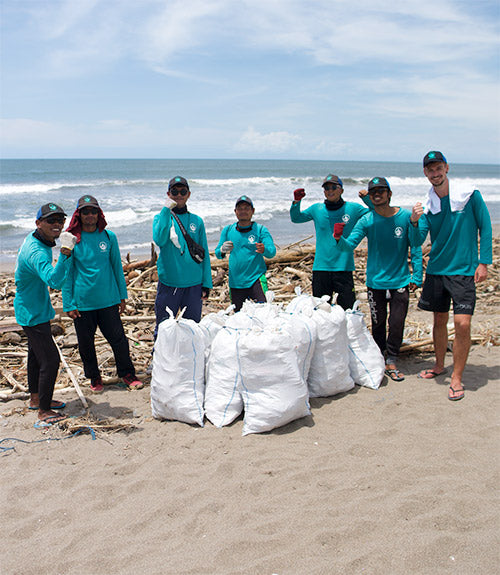
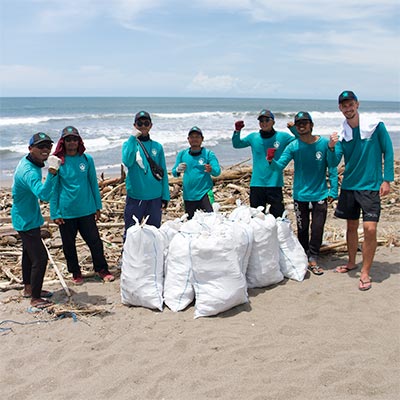
At Oceanmata, we don't just talk about the problem – we act. For every product sold, we collect 1 kg of plastic from the ocean, directly on the beaches of Medewi, Bali. Our local team regularly conducts beach cleanups and actively prevents plastic from entering the deep sea.
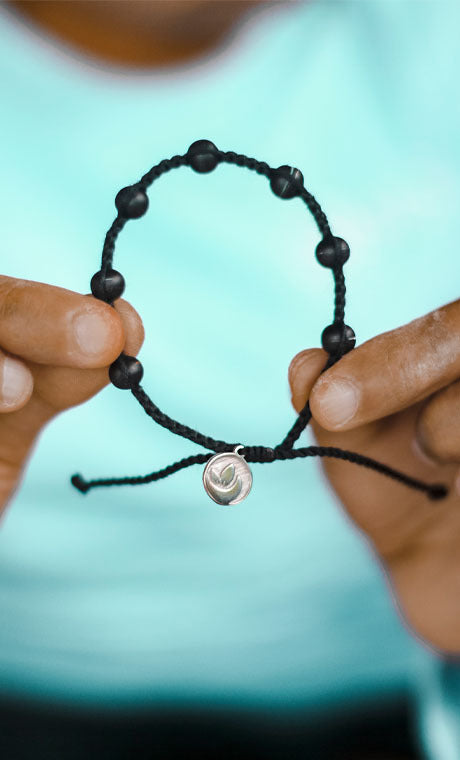
Our sustainable phone cases and our ocean plastic jewelry are made from recycled material – a statement you hold in your hand every day. And with a marine animal sponsorship, you can specifically protect endangered species and their habitats.
When Dominik quit his job as an engineer at Airbus in 2020 to found Oceanmata, he knew: the fight against ocean plastic begins with small steps. What started as an idea on a littered beach in Bali is now a team of 11 employees in Medewi who collect plastic every day.
Join us – so no more plastic reaches the deep sea
Every Oceanmata product stands for 1 kg less plastic in the ocean. The more we collectively remove from the sea, the less sinks to the deep sea. Become part of the movement – for a clean ocean, from the surface to the deepest depths.
Entdecke passende Oceanmata Produkte